Data-Driven Storytelling: How Mayor Lincoln Leads With Impact

Updated: Aug 24
Key takeaways • Data driven storytelling means leading with human impact and backing it with evidence, not the other way around. • Data doesn’t win elections and it doesn’t win deals. Stories carry the decision, data makes the story defensible. • The fix is sequencing, not volume. Most technical messages fail because the proof arrives before the person. • Mayor Webster Lincoln built this framework as a Genentech data scientist turned mayor of East Palo Alto, and it maps directly to B2B content. |
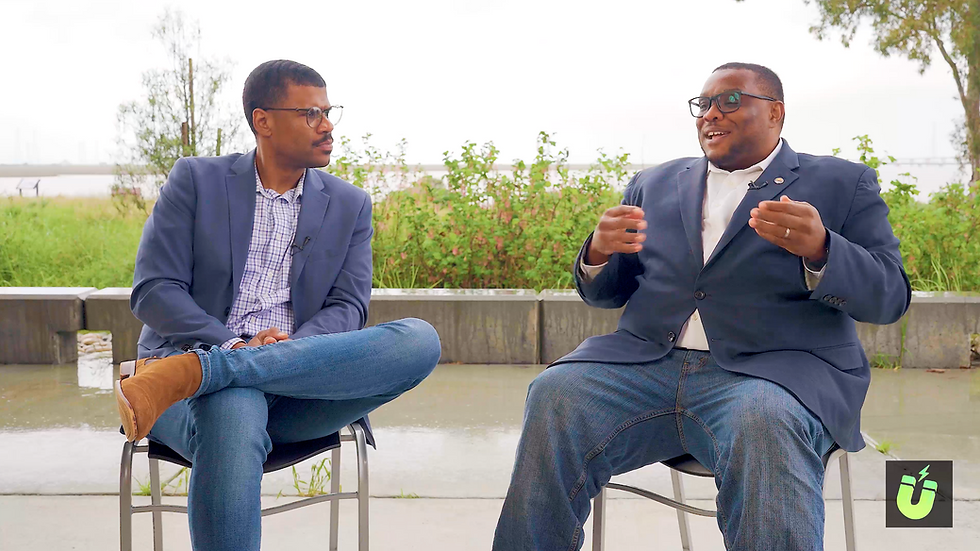
Webster Lincoln is a data scientist leading a city. He built his career at Genentech analyzing complex diagnostic data in digital pathology. Now he’s navigating the deeply human, deeply emotional work of local government. On Magnetic, I asked Mayor Lincoln a question that every technical marketer grapples with: how do you translate complex evidence based thinking into messages that move people emotionally?
Because data doesn’t win elections. Stories do. In more than 16 years of building content for enterprise technology brands, the most common failure I’ve seen isn’t weak data. It’s strong data presented in the wrong order. The tension between analytical rigor and emotional resonance is one of the defining challenges of modern B2B communication, and Mayor Lincoln’s answer draws from both worlds.
What is data driven storytelling
Data driven storytelling is the practice of leading with a human story and using data as the evidence that makes it credible. Instead of opening with statistics, you open with the person affected, then introduce the numbers that prove the problem is real and the solution works. |
Most definitions of the term come from the data visualization world, where it means wrapping a narrative around charts and dashboards. That’s the version Stanford and Harvard Business School teach. For marketers and communicators, the more useful version is about message architecture. It’s not a volume problem, where you need more data or more story. It’s a sequencing problem, and the sequence is what Mayor Lincoln has mastered.
Why doesn’t data alone persuade
The instinct when you have compelling data is to lead with it. Your platform processes transactions forty percent faster. Your algorithm reduces false positives by 60%. Your infrastructure cuts costs by half. These are powerful proof points. But presented as the opening argument, they create an intellectual exercise when what you actually need is an emotional connection.
B2B buyers are people making career risky decisions inside crowded rooms. [The B2B buying committee -> /post/post-b2b-buying-committee] runs to ten stakeholders or more, most of them outside IT, and nearly half of enterprise evaluations end in no decision because staying put feels safer than choosing wrong.
A wall of statistics doesn’t make change feel safe. A story about someone like them who made the change and survived it does. That’s also why [buyer fatigue -> /post/buyer-fatigue-enterprise-sales-partners-over-pitches] sets in so fast when every vendor opens with benchmark numbers.

How does Mayor Lincoln sequence data and story
Mayor Lincoln doesn’t abandon data in favor of narrative. He uses data to strengthen narrative. The difference is in the sequence. He leads with the human impact, then backs it up with the evidence. Not the other way around.
He starts with the person affected: the resident who can’t afford rent, the student who doesn’t have access to after school programs, the small business owner fighting displacement. Then he introduces the data as evidence that the problem is real and the solution is possible. His scientific training still does the heavy lifting, it just does it second. It’s the same discipline he describes in [finding the signal in the noise -> /post/signal-vs-noise-marketing-data-scientist-mayor], and it’s central to how he approaches [brand narrative strategy -> /post/brand-narrative-strategy-rewriting-perception] for an entire city.
His dual perspective as a scientist and a public servant gives him unusual credibility on this balance. He’s not a communications consultant theorizing about storytelling. He’s someone who has to make data driven arguments land with audiences ranging from policy experts to community members who have never opened a spreadsheet.
How do B2B marketers apply the impact first framework
The translation is direct. Instead of leading your case study with "40% reduction in processing time," lead with the engineer who was drowning in manual work and couldn’t keep up with their team’s velocity. Then introduce the 40% as the evidence that the transformation was real. This is exactly the fix for the unquotable B2B case study. A number without a person attached is neither memorable nor citable.
The framework also scales across audiences. The same story can carry a technical proof point for the engineer and an outcome for the economic buyer, which is the layering move Sharon Cordesse describes for pitching to split buyer motivations. And it holds across experience gaps too, the challenge Mayor Lincoln unpacks in messaging across personas.
If you’ve ever been told your message is too technical, or conversely that you need more data to support your claims, the answer is rarely to add or remove evidence. Get the sequence right first. Person, then proof.
Watch the full conversation
Watch this clip if you’ve ever struggled with data driven storytelling, whether that’s making your technical audience feel something or making your business audience trust your numbers.
If you want a partner to build story first, evidence backed content across SEO, AEO, GEO, and LLMO, book 30 minutes with MQL Magnet or explore our video production services.
Frequently asked questions
What is data driven storytelling?
Data driven storytelling is the practice of leading with a human story and using data as the evidence that makes it credible. You open with the person affected, then introduce the numbers that prove the problem is real and the solution works.
Why should you lead with story instead of data?
Because decisions are emotional before they’re analytical. Data presented first creates an intellectual exercise. A story presented first creates connection, and the data that follows makes that connection defensible. It’s a sequencing problem, not a volume problem.
How do you use data driven storytelling in B2B marketing?
Lead case studies, pitches, and campaigns with the person affected, then introduce the metric as proof. Instead of opening with a forty percent reduction in processing time, open with the engineer drowning in manual work, then present the forty percent as evidence the transformation was real.
Who is Mayor Webster Lincoln?
Webster Lincoln is the mayor of East Palo Alto, California, and a data scientist who built his career at Genentech analyzing diagnostic data in digital pathology. He appears on Magnetic, the MQL Magnet interview series, discussing how to translate evidence based thinking into messages that move people.